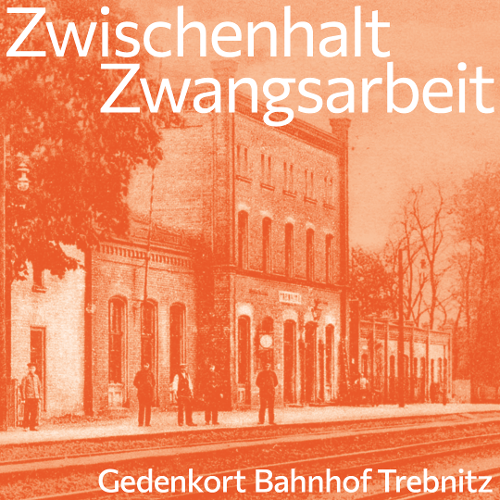
This 45-minute audio guide explores a little-known chapter of German history: forced labour in rural areas during the Second World War. The exploitation of prisoners of war, concentration camp inmates, and civilian forced labourers by the Nazi regime did not take place only in munitions factories, camps, and large construction sites, but also in the countryside.
Using the example of the Brandenburg village of Trebnitz, the tour tells the stories of some of the approximately 1,000 people who were forced to work here and in the neighbouring village of Wulkow during the Second World War. Beginning at the railway station and continuing through the village to the Schloss Trebnitz campus, the tour brings individual life stories to light while explaining the different forms and mechanisms of the Nazi forced labour system at the very places where these events occurred.
Text & Production: Stephan Felsberg
Project Organiser: Schloss Trebnitz Educational and Meeting Centre (Schloß Trebnitz Bildungs- und Begegnungszentrum e. V.)
Funded by: EVZ Foundation (Foundation Remembrance, Responsibility and Future) through the Memorials programme
Image Credits by Station:
- Private collection of Henryk Morawiak
- Based on a map from the information portal www.zwangsarbeit-archiv.de
- © United States Holocaust Memorial Museum Collection. From the Centropa Archive
- Private collection of Joëlle Ferraguti
- Trebnitz Village Archive
- Site plan based on the 1926 Messtischblatt (German topographic map)
7./8. Private collection of Henryk Morawiak - Private collection, www.erinnerungsort-wulkow.de
- www.archive.org