Many myths still surround the Titanic today. On 10 April 1912, it set sail from Southampton via France and Ireland for New York. At the time, it was the largest steamship in the world and was considered unsinkable. But the luxury liner never reached its destination: on the night of 14 April, the ship collided with an iceberg. The accident turned into a disaster. Neither was the crew adequately prepared, nor was the ship carrying enough lifeboats. When the rescue ship, the Carpathia, arrived the following morning, of the approximately 2,200 people on board, only 700 could be rescued. 1,500 people died. The causes included ignored iceberg warnings, inadequate communication and errors in the uncoordinated loading of the few boats.
The tragedy in this disaster was that status and class often determined who survived. The shipping company White Star Line relied heavily on the business of the many third-class emigrants who hoped for a better life in America. In an emergency, however, the boats were primarily filled with women and children from first and second class. Third-class passengers were barely informed as to what was happening or informed too late. To reach the boat deck, they had to make their way from the depths of the 53-metre-deep hull through winding corridors, without escape-route plans. Thus, significantly fewer people from the third class survived than from the upper classes.
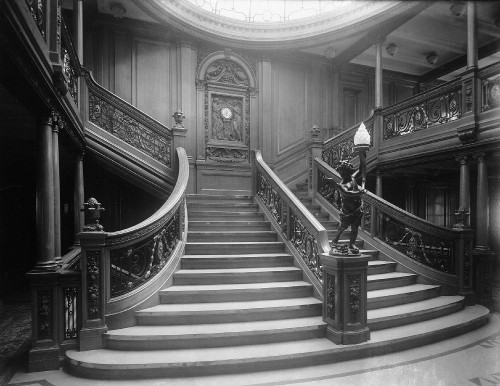
The furnishings also reflected this strict hierarchy. First class offered salons, cafés, a swimming pool and the finest interiors. A crossing in the most exclusive suites cost a fortune. The second and third classes were furnished far more simply; nevertheless, for many travellers, they still offered a greater level of comfort than they had previously known.